Rough automatic draft, low quality: expect mistakes and awkward wording. It will be replaced by a better translation. Original →
15
ee at a distance greater than the dimensions of the focusing device. Lasers are a different matter. After the advent of quantum electrons and the creation of lasers *), it became possible to concentrate powerful light fluxes in the form of beam cords.
The word laser is an abbreviation of the English phrase Light Amplification by Stimulated Emission of Radiation, which is translated as follows: amplification of light by induced emission of radiation. Let’s try to figure out what this phrase means. We know that light is electromagnetic radiation that travels in the form of a wave and carries energy. A light wave is a fast-moving electromagnetic wave propagating in a vacuum with a speed of . The main characteristics of the wave process are: wavelength - the distance between two crests of a traveling wave and frequency - a value indicating how many times per second a wave crest appears at some fixed point in space. The wavelength of light and its frequency are related to the speed of light by the simple relation .
Visible light corresponds to wavelengths from to () and frequencies from to (frequency - one vibration per second).
In a light wave, periodic changes in space and time are experienced by electric and magnetic fields, similar to what happens in a radio wave. However, an ordinary light wave, unlike a radio wave, is not monochromatic. A wave is said to be monochromatic when the periodic changes in the electric and magnetic waves of radiation emanating from different sources can, in general, coincide. If, with an exact coincidence of frequencies, the crest of one wave always coincides with the crest of another, then the amplitude of the resulting wave doubles. In this case, the waves are said to add up in phase. Phase relationships between lights characterize the distribution
16
the position of the crests of one wave in relation to the crests of another wave. If this relative position remains unchanged all the time, then the waves are called coherent. The word “coherence” literally means coherence, connectedness. The concept of coherence plays an important role and is widely used in physics.
The overall light wave is not monochromatic. The fact is that the light that we see - sunlight, light from fluorescent lamps or incandescent lamps - is emitted by a large number of individual independent emitters (atoms), each of which emits light without any connection with whether its neighbors emit or do not emit light. As a result of such chaotic emission, the light waves that make up the radiation we observe are not coherent with each other, and the resulting light wave is not monochromatic. It is the non-monochromaticity and incoherence of light that translates into the concentrations of light energy in the beam cord (hence the impossibility of constructing the “hyperbolus of engineer Garin”).
We know that light is emitted by atoms. It is atoms that are those individual independent emitters that we just talked about. At the atomic level, representing light radiation as a continuous wave of light is unfair. Atom can absorb or emit light only in the form of certain portions of light energy - light quanta. The quantum energy value is , where is Planck’s constant, and is the frequency of light.
The energy of visible light quanta will range from to . Although this energy is very small, the quantum nature of light is significantly manifested in the interaction of light with matter. At the same time, light has not lost its luminous wave nature, which manifests itself in all those phenomena where physical relationships are important (the addition of waves, the formation of light beams, etc.). Thus, light has its stable wave and corpuscular, that is, properties inherent in particles.
So, micro-receivers of light are atoms, which under normal conditions produce a flow of incoherent radiation quanta. It is obvious that the radiation is emitted by atoms that have some excess energy, the so-called excited atoms. But an excited atom is unstable; it can spontaneously emit radiation quanta without any external reason. The spontaneous emission active occurs by chance. Such spontaneous emission is irregular and chaotic in nature. It is incoherent. But the possibility of emitting light energy is not limited to spontaneous processes. It must be remembered that the internal energy of atoms can only take on certain specific values. As they say, an atom can only be on one energy or another. Transitions of an atom from one level to another are accompanied by a change in its internal energy. When transitioning from a lower energy level to an upper one, an atom absorbs energy; when transitioning from an upper to a lower energy level, an atom releases energy. These transitions are therefore accompanied by either absorption or emission during the transition from energy level to level , given by
In addition to spontaneous transitions of atoms from an upper energy level to a lower one, there is an amazing phenomenon of stimulated radiation, which is described by A. Einstein. The process of induced radiation differs from spontaneous emission primarily in that it does not occur on its own, but under the influence of an external
17
in relation to atomic radiation. In this case, secondary quanta are indistinguishable from primary ones. They exactly repeat the frequency and direction of propagation of primary quanta. Induced radiation is called induced because the acts of its emission are induced (caused) by radiation external to the atom. As a result, unlike the spontaneous emission of many atoms, stimulated emission is coherent.
Thus, in optics there is a phenomenon suitable for obtaining corent radiation. This is stimulated radiation. But for one atom, the probability of stimulated emission during transitions from upper energy levels to lower ones is equal to the probability of absorption during transitions from lower levels to upper ones. In order for induced emission to prevail over absorption, it is necessary to have more atoms at the upper levels than at the lower ones. But under conditions of thermal equilibrium, the situation is just the opposite: at the lower energy levels there are more atoms than at the upper ones (Fig. 1). When radiation interacts with such a system of atoms, the following will happen. Part of the radiation is absorbed, and some of the atoms will move to the upper energy level (Fig. 2). If the system of atoms is so pre-prepared that at the upper level the energy of the atoms is greater than at the lower level, then during the interaction of radiation
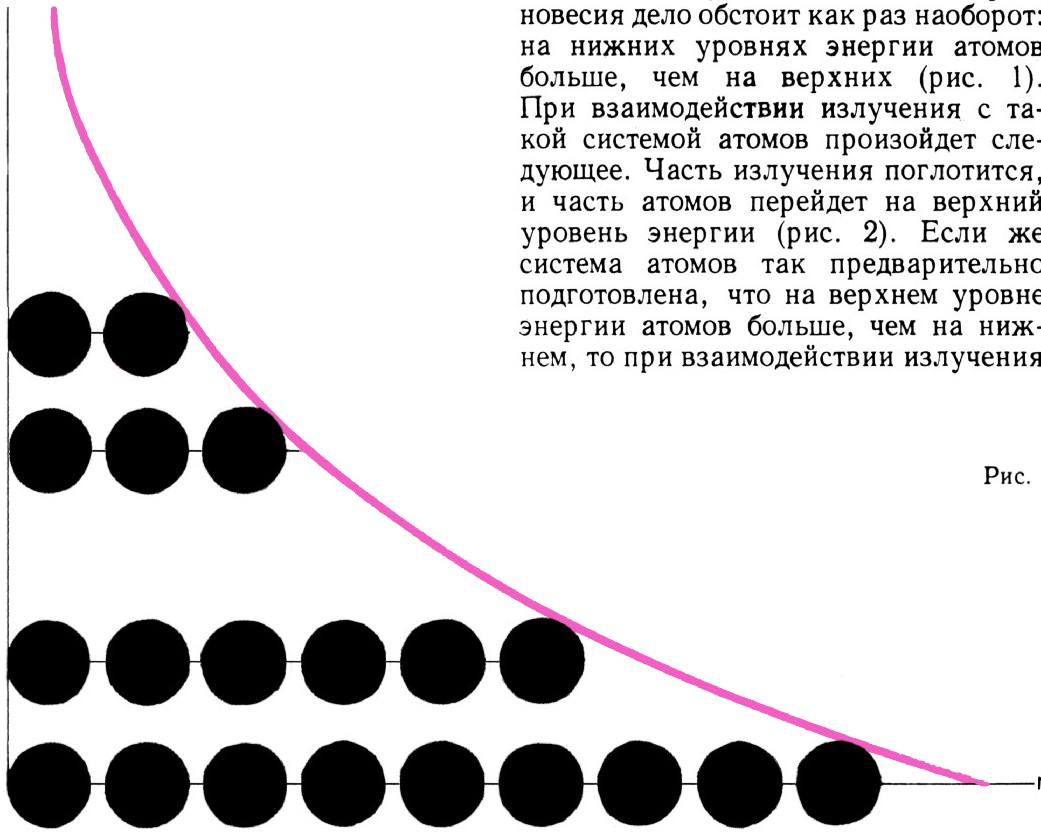
Fig. 1
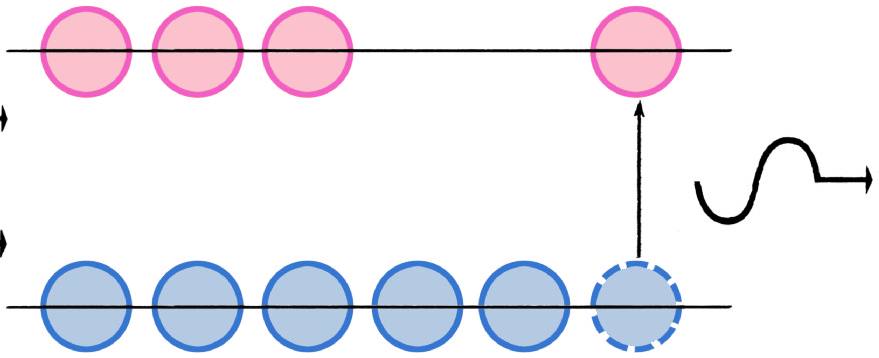
Fig. 2
18
with such a system of atoms, due to the effective induced emission, the initial radiation will be amplified, as is schematically shown in figure 3. Due to the properties of induced radiation, the secondary radiation amplifies the primary one and is its exact copy. Together they constitute one wave, the amplitude of which increases in proportion to the number of acts of induced emission (Fig. 4). Systems of atoms in which for at least two energy levels there is such a situation that the upper energy level is populated by the lower one are called systems with population inversion. The word inversion means to reverse, to reverse the normal order of things.
So, the basis of quantum electrical peaking as a science in general is the amplification of induced radiation, and the main thing in lasers is the use of induced radiation in systems with population inversion for correct amplification and generation of light waves.
Here the difference should be supported by amplification and generation. An optical amplifier serves to increase the voltage of the electric field of a light wave arriving at its input. The output of the amplifier must produce more intense but accurate input radiation. In this sense, the optical amplifier is completely similar to its predecessor, the radio amplifier. An optical generator must be a source of optical radiation, originating directly in the generator and emerging from it into external space.
For the optical generator to operate, feedback is required. It is carried out as follows. A system of atoms with population inversion is located between two mirrors strictly parallel to each other.
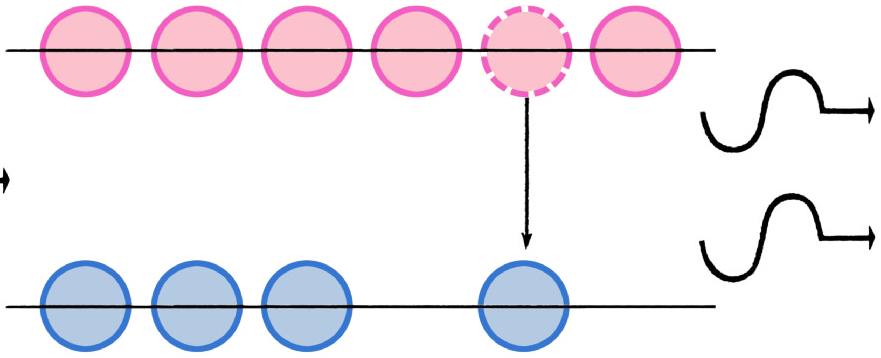
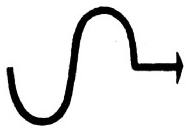
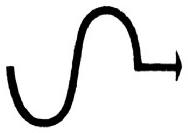
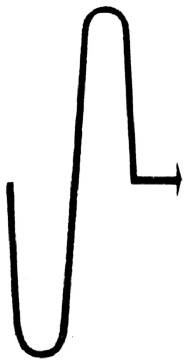
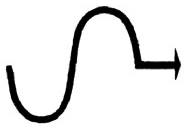
Fig. 4
19
At some point between the mirrors, radiation spontaneously arises. It spreads towards the mirror and intensifies as it spreads. When reaching the mirror, the light waves are reflected and turned back. If the crests of the reflected waves coincide with the crests of the incident waves, then the waves reinforce each other. To do this, the distance between the mirrors must be a multiple of an integer half-length. In general, hundreds of thousands of half-lengths are laid between the mirrors. The emitted energy accumulates in the space between the mirrors and affects the system of atoms, causing stimulated emission. If the power of the induced radiation exceeds the power of the inevitable losses for heating the mirror, scattering, as well as for useful radiation into external space, then an insignificant light wave arises. Due to the properties of stimulated radiation, this wave is highly monochromatic. All atoms work synchronously. This is how they are forced to work by feedback, carried out by radiation accumulated between the mirrors.
For the use of lasers, it is very important that during stimulated emission, secondary quanta repeat not only the frequency, but also the direction of propagation of the primary quanta. As a result, laser radiation has not only a high degree of monochromaticity, but also ideal directionality. Thus, the formation of the light cord is automatic.
Before moving on to the description of lasers themselves, let us complete the presentation of the fundamentals of quantum electronics with the following group of analogies. Let’s imagine the stands of a large stadium filled with thousands of passions of large quanta. Before the start of the game, the big guys talk about something, throw something out, but each one is independent of each other. A strong, smooth noise is created. The game started, everyone froze. Quiet. And then suddenly, starting somewhere, it grows and reaches a deafening force of a single cry “shay-boo, shay-boo.” Everyone screams in unison, screaming synchronously, which achieves a laser-like effect.
The first laser used ruby - a single crystal of aluminum oxide (Al₂O₃). In a ruby crystal, some aluminum atoms are replaced by chromium atoms. At a concentration of about 0.05%, the chromium impurity gives ruby its characteristic pinkish-red color.
Population inversion in ruby is achieved using three energy levels and auxiliary pump radiation. In the three-level method, to increase the number of atoms at the upper energy level or (equivalently) to reduce their number at the lower level, powerful auxiliary radiation is used, which connects one of the working levels with the third auxiliary level and pumps the atoms upward.
Currently, record energies and pulse powers are produced by ruby lasers and glass lasers doped with neodymium. Therefore they are of the most interest.
The main element of a ruby laser is a highly homogeneous synthetic ruby crystal. The crystal usually has the shape of a cylinder with a diameter of 0.4÷2 cm and a length of 3÷20 cm. The source of excitation is a flash lamp. Pump up the production as follows. Chromium atoms, which before flashing were at the lower unexcited level, due to the absorption of green or blue light contained in the flash lamp radiation, pass into an excited state (Fig. 5). The lifetime of atoms at the upper excited level is short (less than 10⁻⁷ sec). They quickly move to the lower excited level, giving off excess energy to the crystal lattice, that is, heating the crystal. At the new excited level, the time is 10⁻³ sec. Therefore, this level is called metastable.
20
its atoms go into the ground unexcited state with the emission of a quantum of light in the red region of the spectrum.
When powerful enough, transfer a sufficient number of particles to the metastable level to create a strong inversion.
Powerful gas-discharge lamps are used as pumping lamps. At first they were made in the form of a spiral enveloping the crystal. Nowadays, as a rule, it uses more powerful rod lamps installed parallel to the crystal. The lamps operate in pulse mode. The duration of the flash pulse is approximately a fraction of a second (1 ms). The flash is produced from batteries of capacitors up to 10,000 microfarads, charged up to several thousand volts. When discharged through a lamp, capacitors in one pulse separate tens, or even hundreds of thousands of joules of energy. The pump power per pulse can exceed ten million watts.
Only part of the flash lamp radiation energy, coming to the green and blue parts of the spectrum, goes to excite chromium ions. The rest goes into heat.
The use of pulse mode is due to two circumstances. First, it is difficult to have a high power pump light source operating continuously. Secondly, the crystal heats up greatly during prolonged excitation and loses optical homogeneity.
Naturally, during pulsed pumping the generation is also pulsed in nature. In this case, the inversion obtained in the crystal can be realized in two ways. Let’s consider both possibilities.
Let the reflector mirrors be tuned to resonance and rigidly fixed. Then, as soon as a sufficient number of particles accumulate at the metastable level, generation begins, which will continue as long as the pumping is effective. Generally, this so-called free generation begins 100÷300 ms after the start of the flash and lasts 1 ms.
In the free generation mode, large crystals with powerful pumping produce up to 1000 joules of energy per pulse. This corresponds to pulse power of up to millions of watts.
Another mode is achieved by turning on the resonance mirrors at the moment when the inversion has reached its maximum value. Then all the particles accumulated at the metastable level emit almost immediately, and the generator produces a gigantic pulse of radiation of a very short length of 10⁻⁸÷10⁻⁹ seconds with a relatively low energy (about three joules). But since this energy is emitted in a very short time,
21
then the maximum power of the impullas reaches 300 million - 3 billion watts.
Here the question arises about the laser efficiency (efficiency). From the above estimates it is clear that only a small fraction of the pump energy is converted into laser radiation. In the free generation mode, the efficiency of a ruby laser is less than 1%, in the giant pulse mode it is even less.
What then is the gain that the laser gives?
The fact is that, while we lose in the amount of radiation energy, we gain immeasurably in its quality. This new quality - monochromaticity and directionality - is due to the property of the effect of stimulated emission.
The wavelength of the ruby laser radiation is 6943 Å = 6.943·10⁻⁵ cm. And in the vicinity of this wavelength, in a very narrow interval with a width of the order of 0.1 Å, all the laser power is contained. The width of the radiation spectrum of a thermal source of visible light is approximately 3000 Å, that is, 30,000 times greater.
One of the most powerful thermal light sources - our Sun - emits a power of 8·10³ W/cm² from one square centimeter of surface in visible light. In this case, 0.2 W/cm² comes to a wavelength interval of 0.1 Å. And ruble lasers produce 10⁶ ÷ 10⁹ W/cm² in this range!
The electron field correspondence is 3·10⁴÷10⁶ W/cm². The Sun in the same wavelength range creates a field of 12 W/cm².
The new quality of laser radiation can be illustrated as follows. In principle, solar radiation cannot heat any body to a temperature above 6000°C. Light radiation from gas discharge lamps brighter than the Sun is not capable of heating the body to a temperature above 10,000°C. But when the same radiation from gas-discharge lamps, even with a large loss of energy, is converted into laser monochromatic radiation with a spectral energy density billions of times greater than the original, it can heat the body to several million degrees.
Crystal lasers can also operate in continuous mode. But, of course, impusive lasers provide greater power.
Gas lasers stand somewhat apart. Currently, lasers using gases produced by electron discharges operate in a very wide range of frequencies - from ultraviolet radiation to far infrared. The main structural element of a gas laser is a gas-discharge tube, that is, a tube in which an electron discharge is maintained in the gas. The general gas is rarefied to a pressure 100÷1000 times less than atmospheric. The tube material is glass or quartz. The length of the tubes, depending on the purpose, ranges from 5 cm to 50 m. The gas discharge tubes of gas lasers are largely similar to the tubes of neon illuminated advertising. The laser mirrors are installed either directly at the ends of the gas-discharge tubes, or outside, but in any case strictly perpendicular to the tube axis.
Currently, the most common phenomenon is neon-helium laser continuous action on