Rough automatic draft, low quality: expect mistakes and awkward wording. It will be replaced by a better translation. Original →
28
V. I. Kuznetsov
One day, builders are paving a road and find an ancient cave filled with volcanic rocks. It contained a warehouse of shoes - three hundred pairs of sandals made of woven grass. When, in what building was this amazing warehouse founded? There was no answer. It was obtained only a few years later, when a method was developed for determining the age of a product made of wood, bone and other materials containing carbon.
To understand how the time of creation of such products is determined, let us turn to the nuclear processes occurring in the upper layers of the atmosphere (at an altitude of about 15 kilometers).
The earth’s atmosphere is continuously bombarded by cosmic rays. The bulk of cosmic radiation comes from fast-moving protons—the nuclei of hydrogen atoms. Their energy is enormous - it reaches billions of electron volts. Passing through the atmosphere, protons collide with the nuclei of atoms that make up the air. When atomic nuclei collide, they release neutrons and other particles. The resulting neutrons, in turn, interact with atmospheric matter, most often with nitrogen. In some cases, neutrons knock a proton out of the nitrogen nucleus (consisting of 7 protons and 7 neutrons) and take its place. As a result, nitrogen turns into an isotope of carbon, the nucleus of which contains 6 protons and 8 neutrons. The nuclear reaction that occurs can be written as follows:
The new atom has two more neutrons than the nucleus of the most common isotope of carbon, C. Heavy carbon C is called radiocarbon. Radiocarbon nuclei emit electrons (beta particles) and turn into nitrogen: C N. The rate of this process is characterized by the time during which half of the first initial number of atoms C is converted into nitrogen. This time is called the half-life and is usually designated . For the isotope C years. If another years pass, then of the remaining half of the atoms, half will decay again and one quarter remains - , and in a time of , equal to half-lives,
29
keep only the part of the atoms:
(1)
Here is the number of radiocarbon atoms at the initial moment, is their number at time .
The half-life of radiocarbon is a value of the same order as the age of a person in a culture. History has reliable data only within 5000 years. Knowing the number of radiocarbon decays per unit volume or weight per unit time in the atmosphere, water and living materials, it is not difficult to calculate how much of it decays per year and how much of it is contained on Earth. Calculations have shown that there are only about 60 tons of radiocarbon on Earth.
For every thousand billion atoms of earth’s carbon there is one atom . Radiocarbon atoms, together with common carbon atoms, are produced by plants, and from there they enter the organisms of animals and humans. In any animal organism, radiocarbon is continuously decayed and replenished. In every gram of carbon in a living organism, approximately 14 radiocarbon atoms disintegrate per minute. The concentration of isotone , as a rule, is the same in all carbon that is part of living organisms.
As soon as the organism dies, it falls out of the chain of radioactive carbon cycle going on on Earth. In such an organism a new radio-
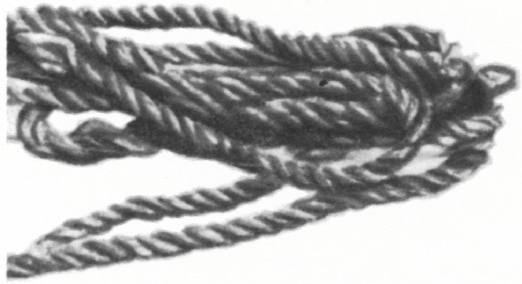
Fig. 2. This rope was used by the ancient inhabitants of Peru about 3000 years ago.
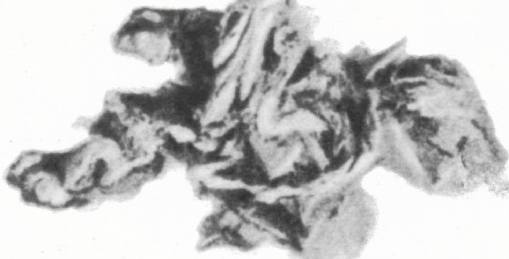
Fig. 3. Scraps of canvas in which one of the handwritten scrolls found near the Dead Sea was wrapped. Their age is about 2000 years.
carbon does not enter, and previously accumulated carbon disintegrates. The amount of radiocarbon in a dead body will be halved after 5,600 years. If an object is made from a tree cut down approximately 5,600 years ago, then in a gram of carbon released from it, the radioactive radiation counter will register not 14, but about 7 decays per minute. Based on the number of decays, the age of objects made of wood, as well as animal bones and plant remains can be calculated. To do this, you need to use formula (1). From this formula it follows that
The number of decays per minute is proportional to the number of atoms . So, at the initial moment of time , and at the moment of time , when the number of atoms is , . Hence,
And
Here is age in years.
30
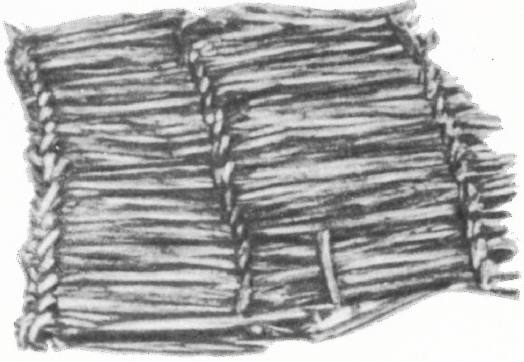
Fig. 4. Reed mat from Nevada [USA]. She is about 3000 years old.
When carbon from sandals found in the cave was placed into a beta particle counter, the value of A was found to be 4.5 times per minute. It follows that the age of the find is approximately 9,000 years.
Measuring the number of C decays is a difficult task. For this purpose, carbon is converted into one of the gaseous compounds - carbon dioxide () or methane (). The radioactive radiation counter is filled with gas. It is he who registers every decay of radiocarbon. But the beta particle counter is also sensitive to other particles: mezons, gamma quanta and some other particles formed by cosmic rays give impulses that are no different from the impulses caused by beta particles. Therefore, coming to record the counter only with a layer of iron. However, it is very difficult to obtain iron completely purified from radioactive impurities. Therefore, a cylinder filled with rue is placed between the counter and the iron record (it is put on the counter). The double “coat” reliably covers the counter from almost all radiation that can distort the measurement results, but not from mezons. Mezons weakly interact with matter and penetrate even through such protection. To eliminate mezonic pulses, the main counter, filled with the gas under study, is surrounded on all sides by auxiliary counters. Before getting into the central counter, the mezon is located in one of the surrounding counters. In this case, the electronic equipment will register two simultaneous pulses in the central and side counters. These double pulses are excluded during counting.
Thanks to such sophisticated equipment, it is possible to change very small radiocarbon concentrations and reliably determine the age of objects that have been buried underground or on the ocean floor for up to 50,000 years.
With what accuracy can the age of radiocarbon be determined by the method? The amount of radiocarbon in the atmosphere is proportional to the flux of primary protons falling on the Earth. The flux of protons varies depending on conditions on the Sun. The lower the solar activity, the greater it is. The fact is that during periods of high solar activity, the magnetic field of the Sun increases and captures some of the cosmic protons that would have fallen to Earth during the years of the quiet Sun.
I had to check the accuracy of the “carbon clock”. They checked on objects whose age was known—wooden products from Ancient Egypt, mutiae of the pharaohs. An even more accurate check was carried out using tree rings. There are trees on Earth that are up to 3,000 years old. This is how long American redwood trees live. Having cut a long-lived tree trunk, you can count the growth rings and take the substance, for example, from the layer corresponding to a three-layer ring (if you count from the edge to the core). Carbon from the isolated substance tree conditionally increases in radiocarbon atoms C—value . From formula (2) we have: